The Kalgidarh Gallery
Artworks Illustrated & Curated by Rajpal Singh Ubhi (Intrinsikh Arts), 2026
This gallery has been created in tribute to Kalgidarh Maharaj, Sri Guru Gobind Singh Ji, the Tenth Guru of the Sikhs and the founder of the Khalsa Panth. The central series of paintings explores the events surrounding the evacuation of Anandpur Sahib, the separation of the Sahibzaade at the River Sirsa, and the sacrifices made by Guru Gobind Singh Ji’s four sons during one of the most defining periods in Sikh history. Beginning with the moment of Vichora (separation), the collection follows the journeys of the Chote Sahibzaade and Vadde Sahibzaade along two separate paths. Each artwork has been carefully researched using historical sources, artefacts, architecture, clothing, weaponry, and Sikh traditions.
The Journey of the Vadde Sahibzaade
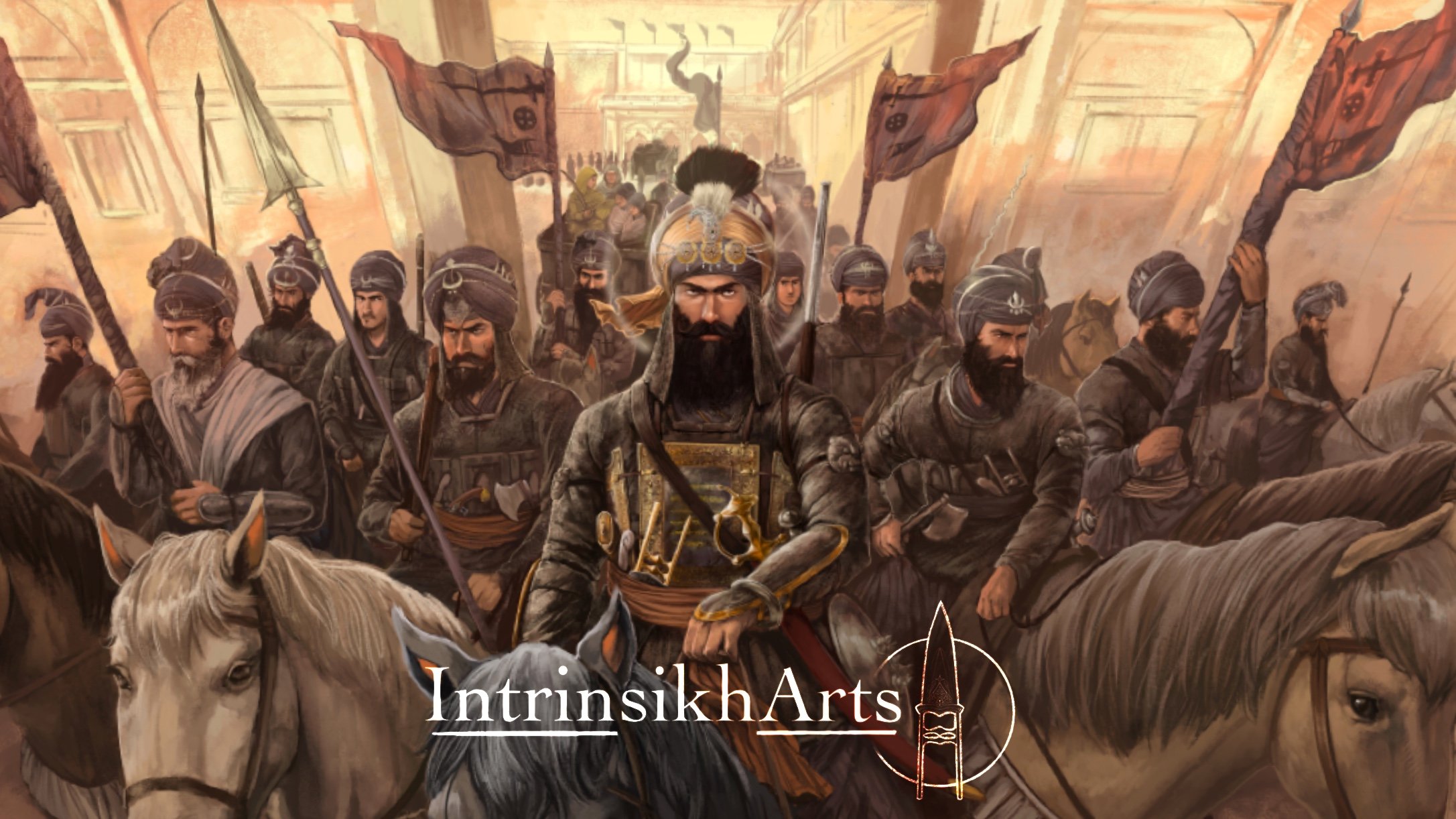
The first painting depicts the evacuation of Anandpur Sahib following the promise of safe passage. This artwork sees a reconstruction of the historical appearance of the Khalsa through historically referenced weaponry, clothing, and armour. In the distance, Mata Sahib Devan (Kaur) Ji, Mata Gujri Ji and the Chote Sahibzaade can be seen in a cart, whilst the two elder Sahibzaade ride alongside their father, Sri Guru Gobind Singh ji.
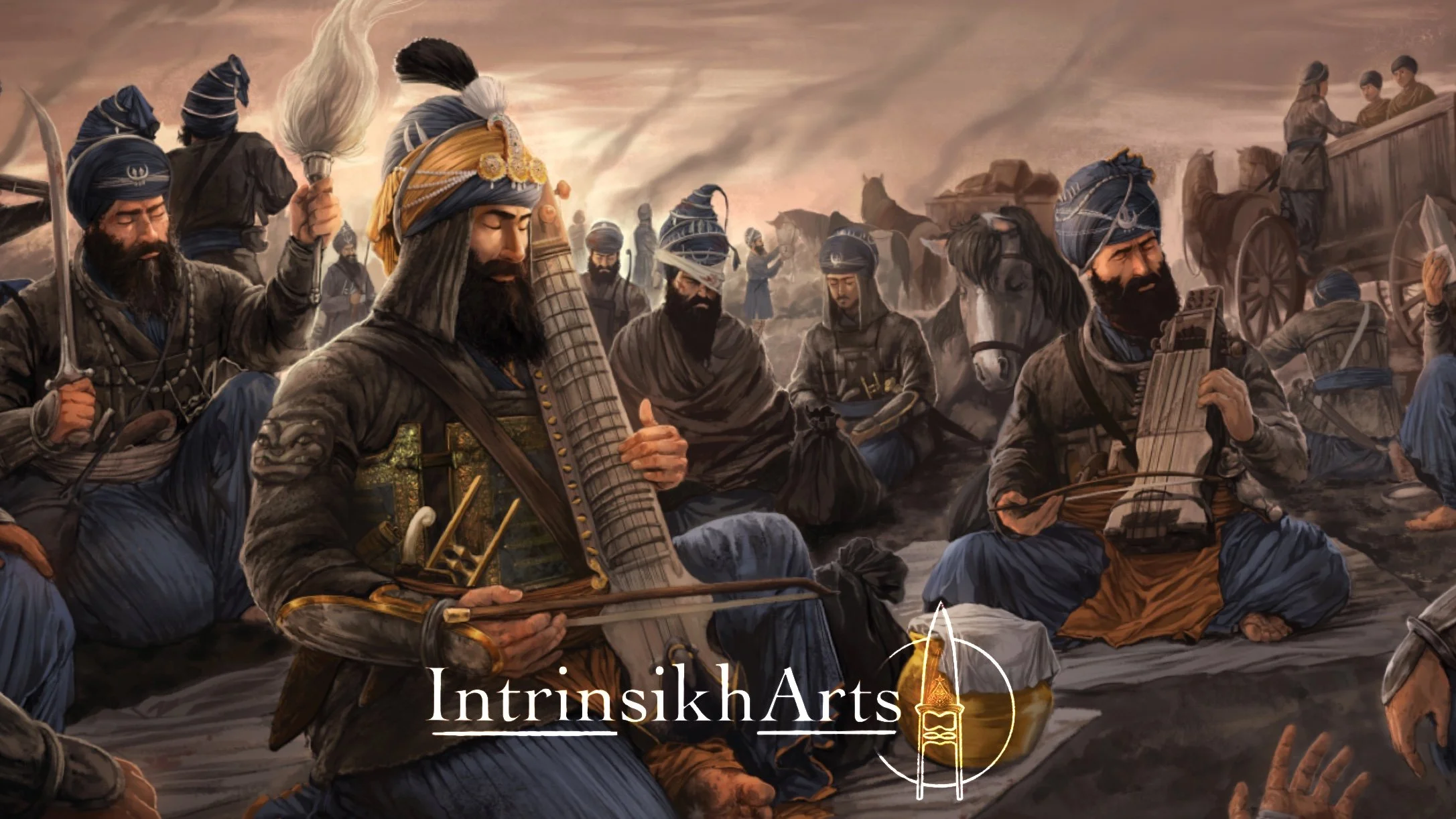
The second painting portrays the singing of Asa Di Vaar during Amritvela after escaping the siege. Whilst the Sikhs recover from battle, Guru Gobind Singh Ji sits adorned in armour, playing the Taus alongside their Sikh who is seen playing the Sarangi. Both instruments have been illustrated according to historical examples. Around them, armed Sikhs stand watch, aiming their muskets at potential combatants.
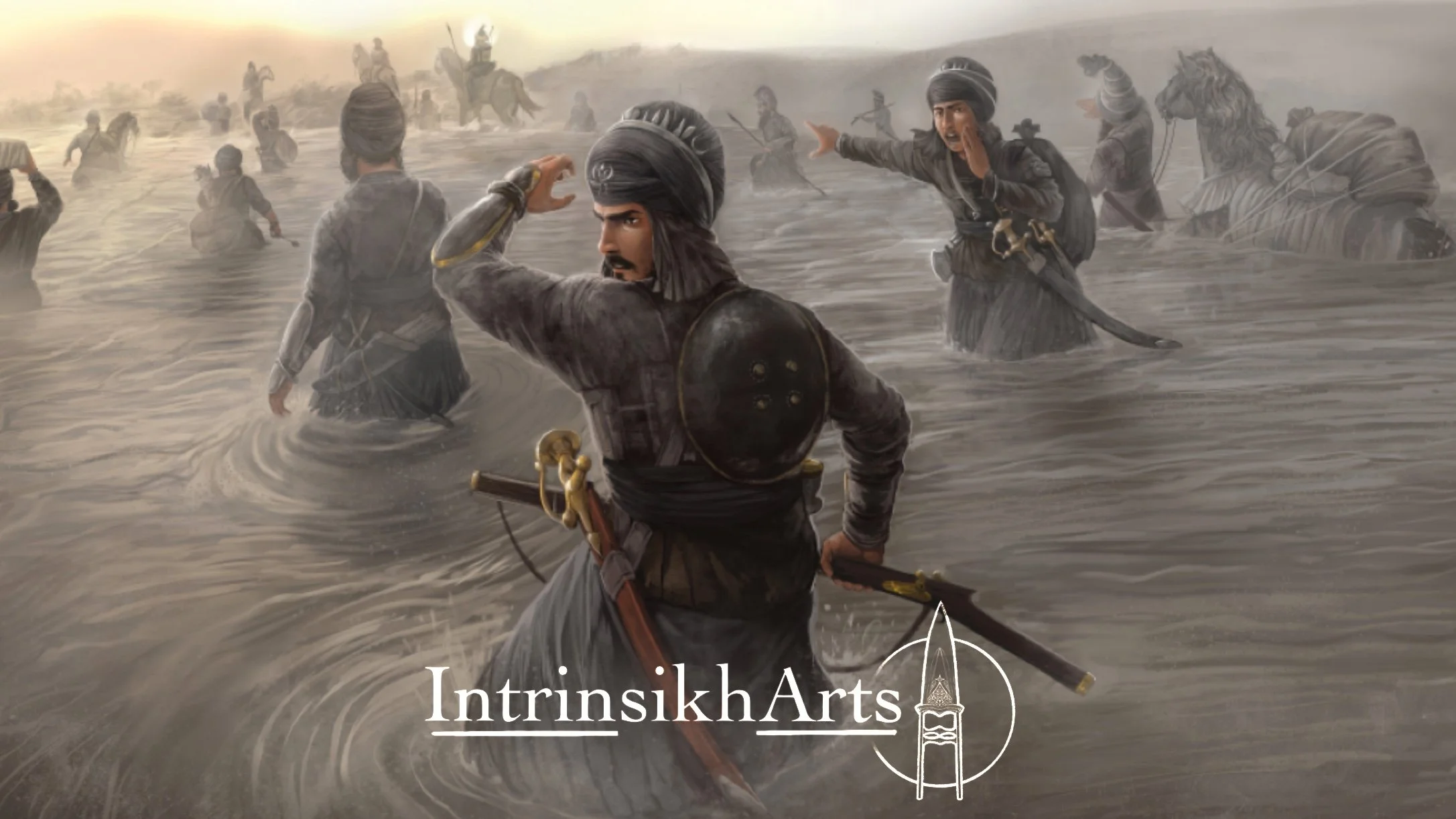
The Vichora (Separation) of the Vadde Sahibzaade, the elder sons of Guru Gobind Singh Ji. Here, we see Ajit Singh desperately looking for his younger brothers, Zorawar and Fateh Singh, who strayed away from the group in the vicious storm. Behind him, Jujhar Singh calls Ajit Singh, regrettably pleading to keep moving forward. This artwork is the left side of a landscape piece. The right side showing the younger sahibzaade can be seen below.
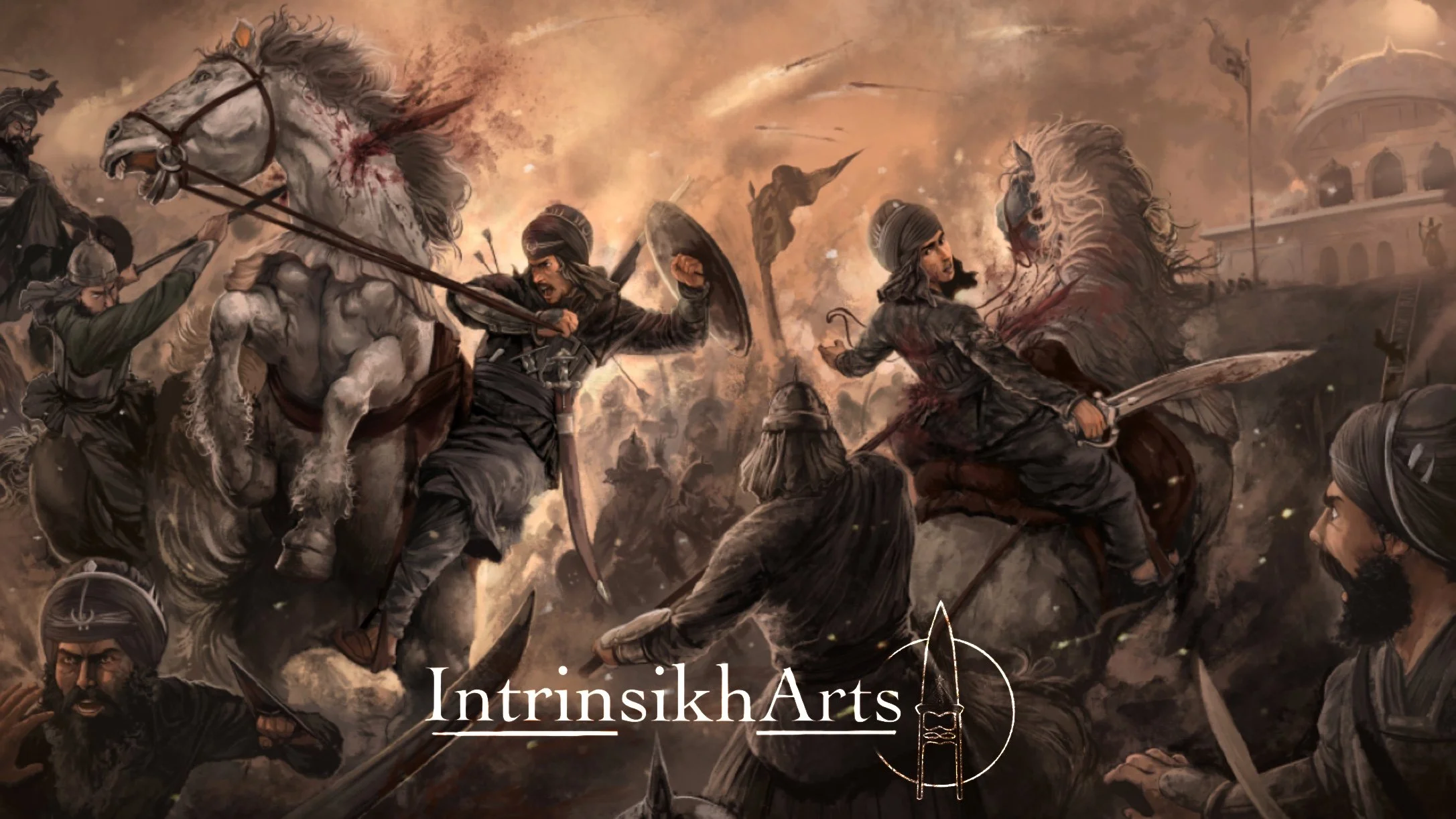
The final artwork depicts the Battle of Chamkaur and the shaheedi of the Vadde Sahibzaade. Chamkaur Di Garhi has been reconstructed according to its earlier historical appearance. Whilst Guru Gobind Singh Ji and the Sikhs defend the fort, the central focus remains the Shaheedi of Baba Ajit Singh Ji and Baba Jujhar Singh Ji. Despite overwhelming odds and mortal wounds, they are shown without fear, embodying complete trust in their Guru and their cause. We see the chaos that ensued in this monumental battle.
The Journey of the Chote Sahibzaade
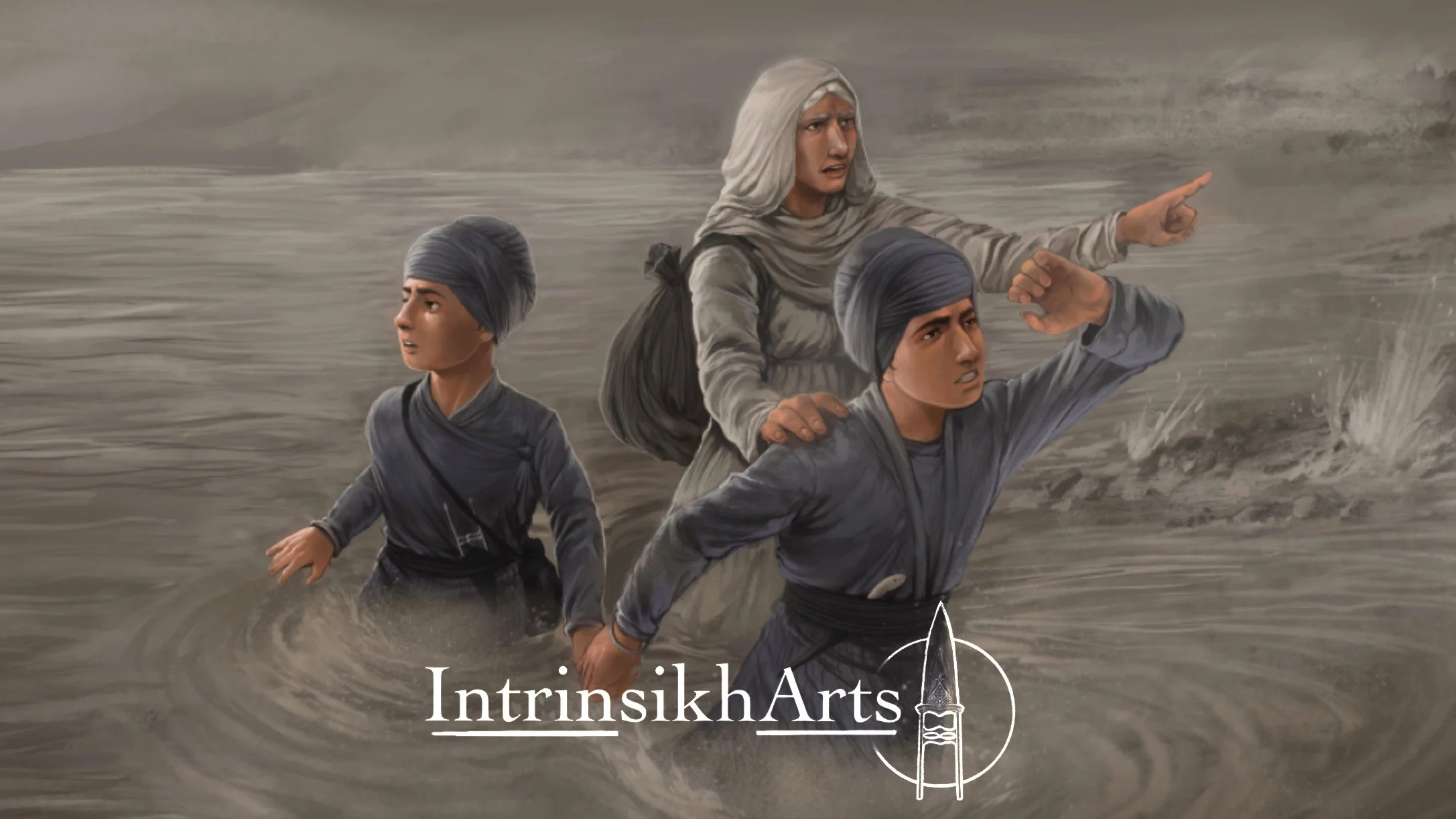
This side of the gallery follows the journey of Baba Zorawar Singh Ji and Baba Fateh Singh Ji after the separation at the River Sirsa, December 1704 CE.
The first artwork above the entrance depicts this moment of Vichora (separation). Amidst the fog, Baba Ajit Singh Ji desperately searches for his younger brothers. On the opposite side, Baba Fateh Singh Ji unknowingly looks towards them, neither aware of each other in the chaos around them. Mata Gujri Ji bravely leads the chote sahibzaade away from the river and into safety, whilst unknowingly travelling away from Guru Ji and their Khalsa Army.
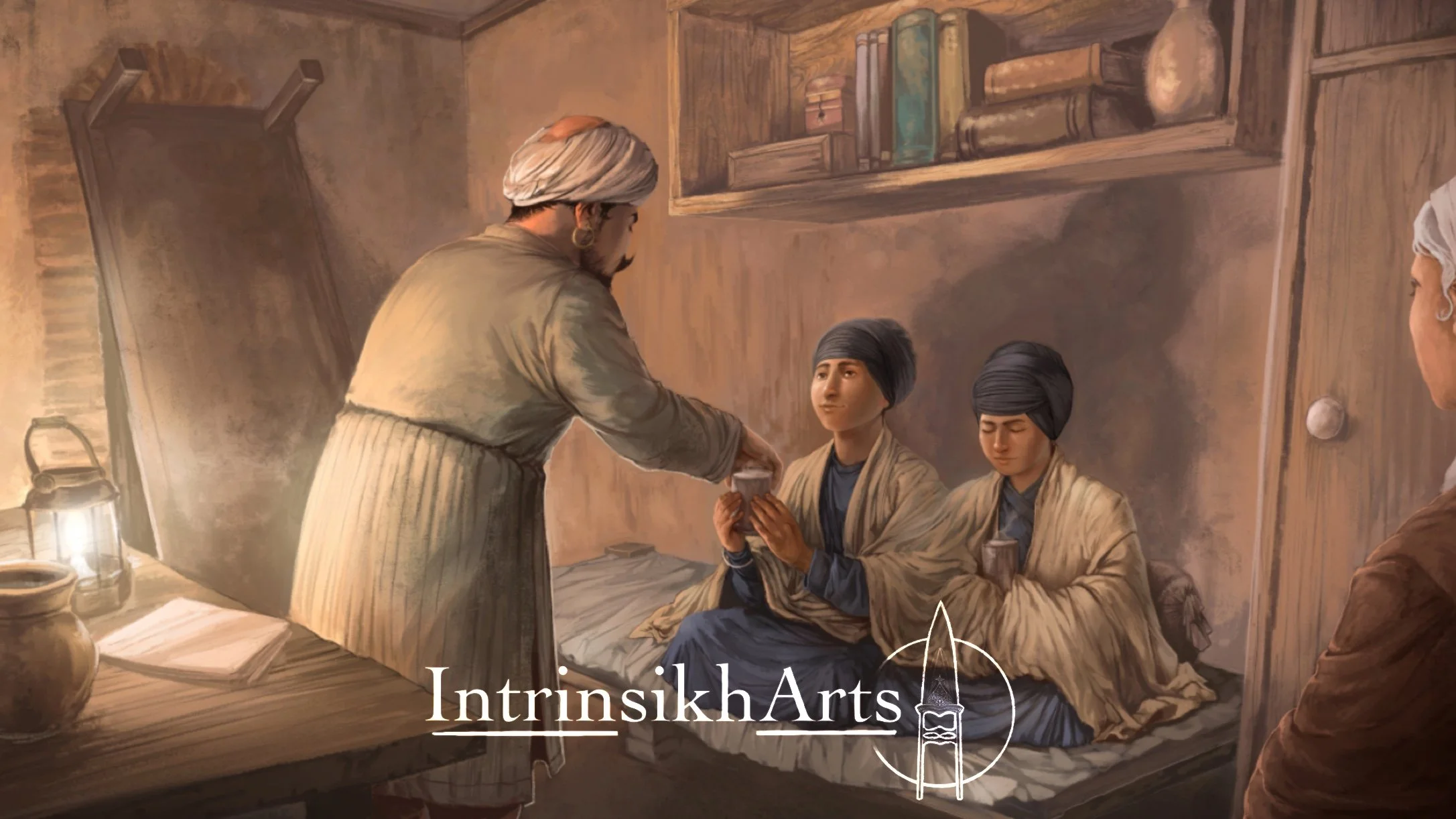
Moving clockwise, the next painting shows the Sahibzaade taking refuge with Gangu as he provides them with warm milk. There is a shadow over the Sahibzaade as Gangu faces away from the light, symbolising Gangu’s moral decline and eventual betrayal, where he turns the Sahibzaade in for a bounty reward. Mata Gujri Ji’s belongings can be seen beside him, foreshadowing the theft that would follow.
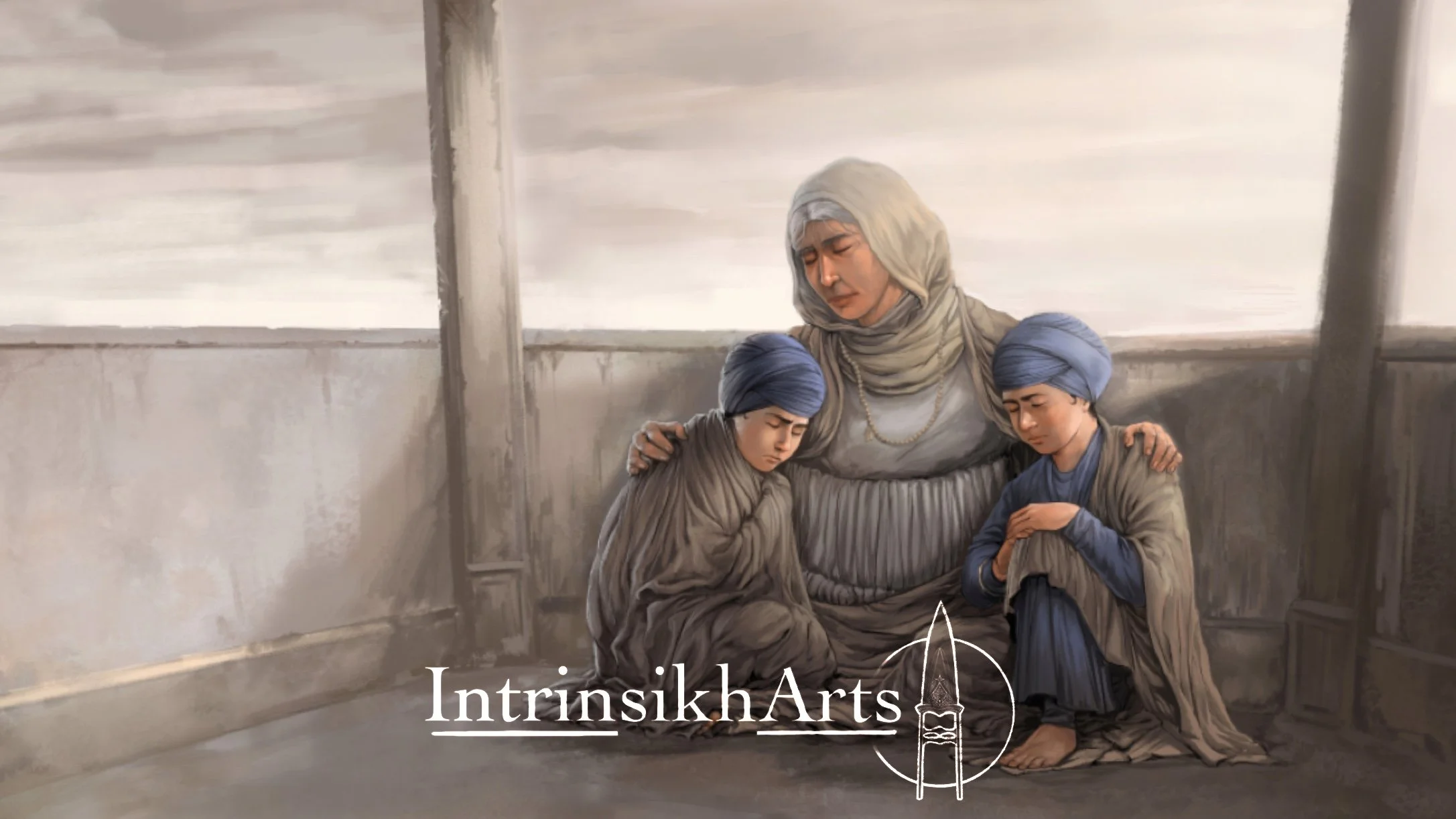
Following the betrayal, they were sent to the Thanda Burj, where Mata Gujri Ji and the Sahibzaade endured imprisonment in the harsh winter as the Sahibzaade faced trials and were subjected to torment and torture by the hands of Wazir Khan.
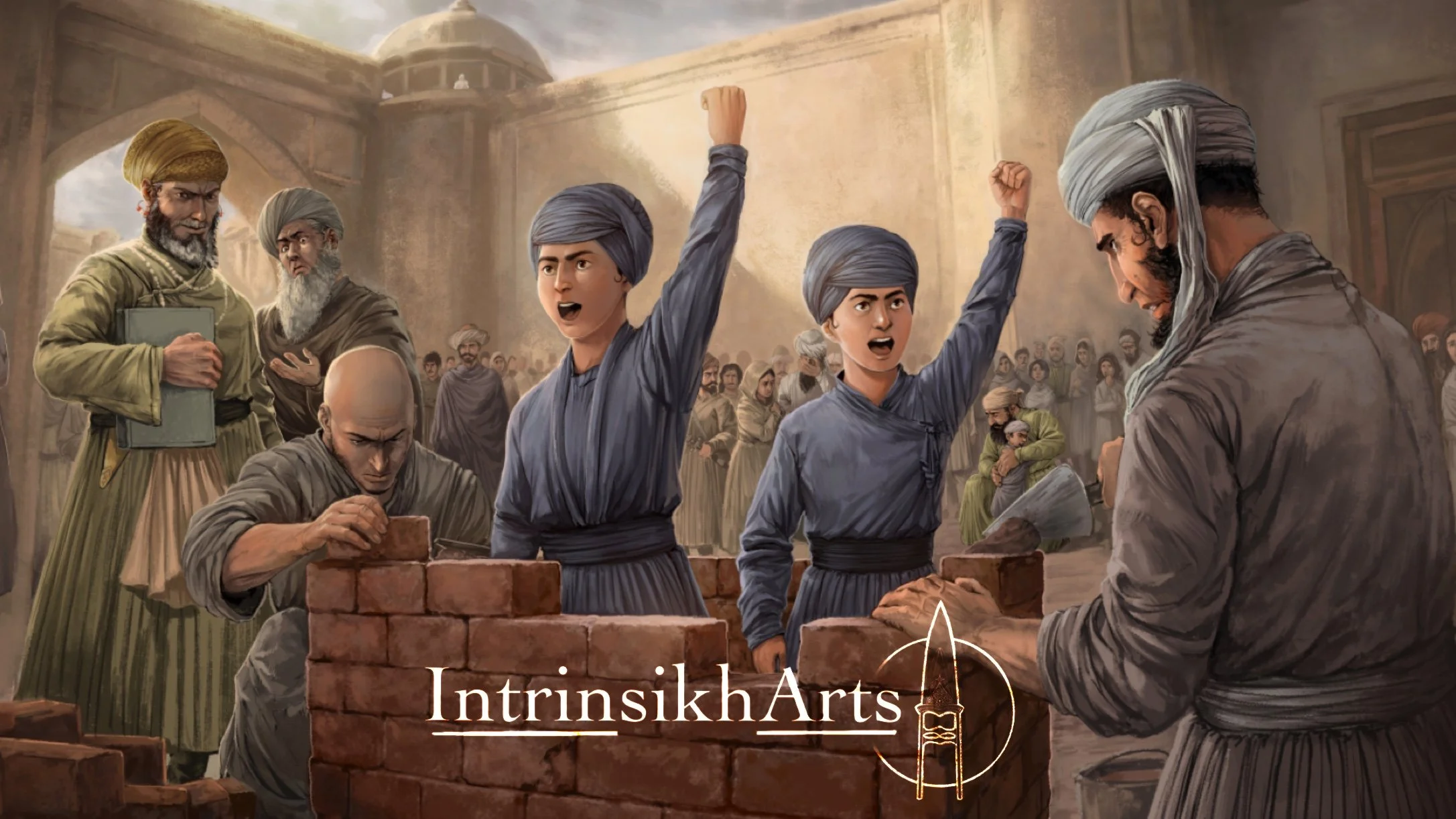
The final painting depicts the Shaheedi of the Chote Sahibzaade. Here, I have captured the range of emotions surrounding the event: Wazir Khan’s face shows satisfaction, juxtaposed by a Muslim Pir, stood distraught at the result of his actions. Those witnessing this tragic event are also displaying deep shock and grief. Centrally, as they are bricked alive, the Sahibzaade did not waver. Even in the face of death, the Chote Sahibzaade; Baba Zorawar Singh Ji and Baba Fateh Singh Ji, raised their fists and praised the Divine, for they were exalted from worldly attachments, for they had their Guru.
Guru Nanak Dev Ji and Guru Gobind Singh Ji
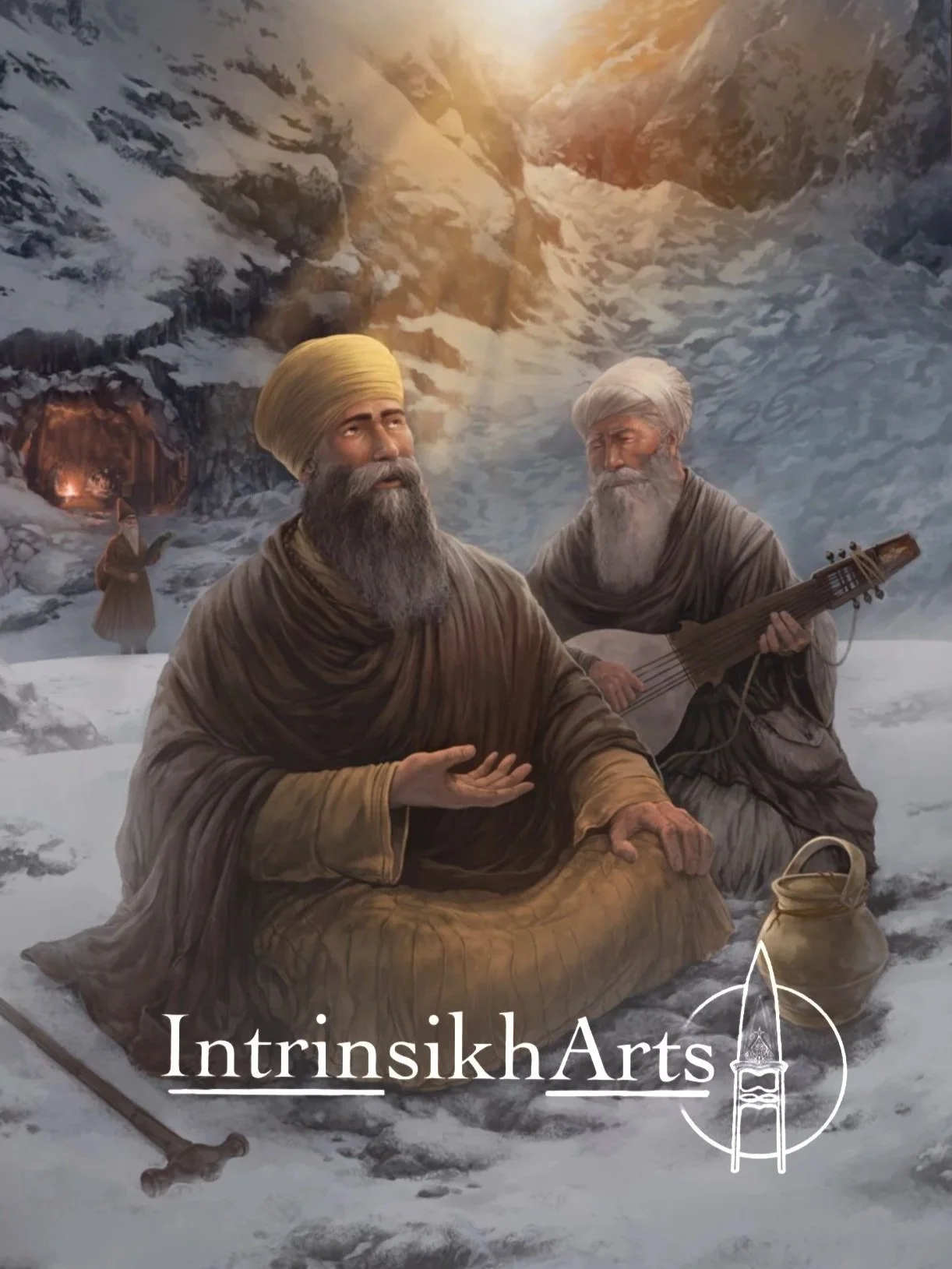
On the right side of the main Darbar artwork depicting Guru Nanak Dev Ji and Bhai Mardana Ji in the Himalayan mountains, shortly before the dialogue of Sidh Gosht. Guru Nanak’s divine revelation was shared with the world through Raag, and as shown in this artwork, Guru Ji is engaged in divine praise as the rising sun bathes their radiant face. Beside Guru Ji sits Bhai Mardana Ji, holding a rabab based on a historical artifact. Behind them, Bhai Bala Ji is seen approaching after having spoken to the Sidhs at the foot of the mountain. Guru Ji would soon after engage in the profound conversation with these Sidhs documented in the Gurbani composition, Sidh Gosht.
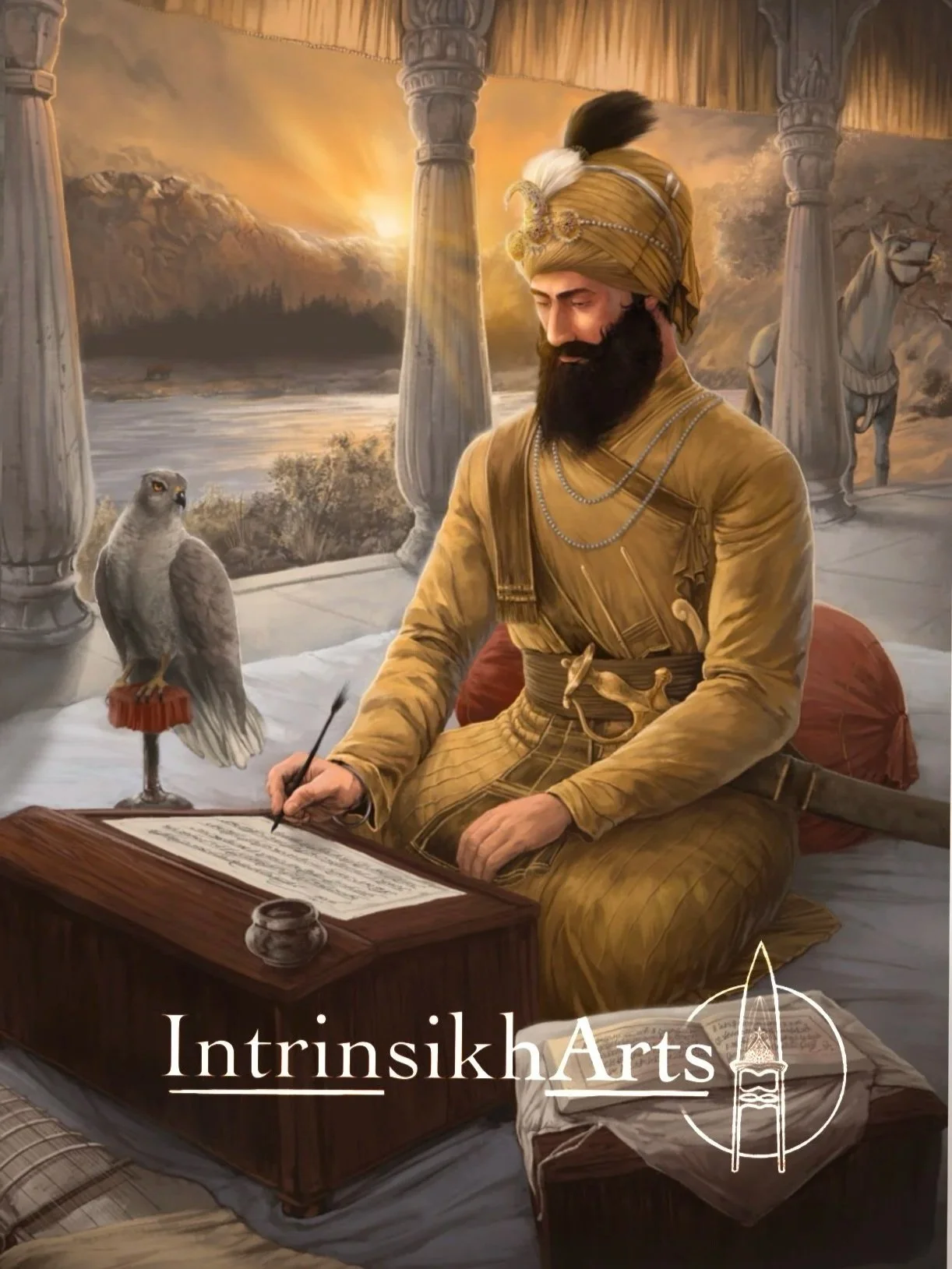
On the left side of the Darbar is an artwork of Guru Gobind Singh Ji composing the opening of Sri Akal Ustat in the hills of Paonta Sahib. Every element of the piece has been informed by historical accounts and artefacts. this includes Guru Ji’s baaj (Eurasian Goshawk) and their blue horse stood behind them. Guru Ji's attire and weaponry have also been referenced from artifacts that can be found around many Asthaans around Gurdwaras in India. Through this piece, the artist portrays Guru Gobind Singh Ji as as the master poet and scholar that they were. Beyond the well known attributes of Guru Ji’s martial spirit, their profound creative essence often remains less seen. This work aims to bring that artistic expression to the forefront, attributing the equal saint-soldier balance that they embodied.